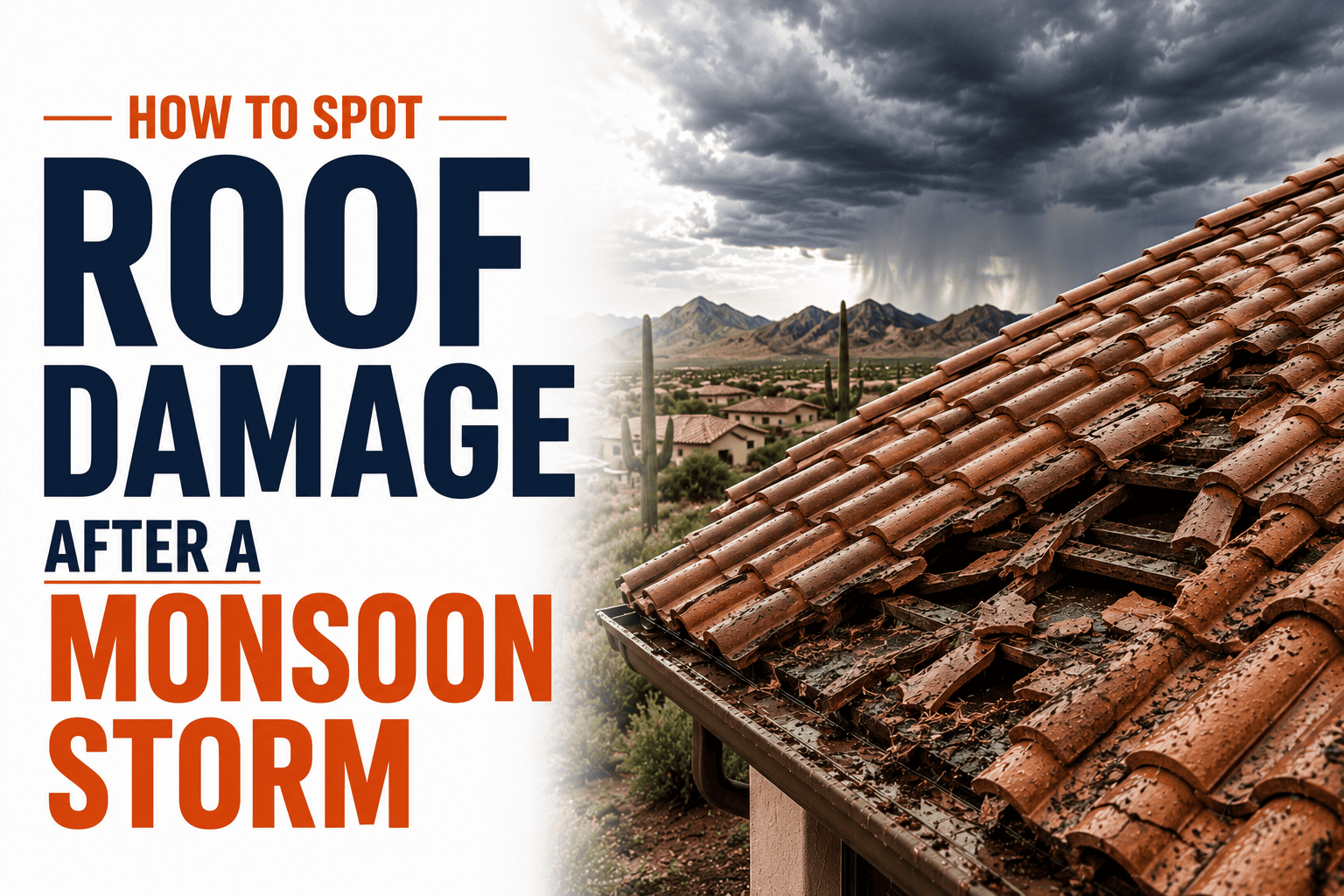
How to Spot Roof Damage After a Monsoon Storm
Arizona monsoons can wreak havoc on your roof. Learn how to identify storm damage quickly—before leaks, mold, or structural problems set in.
Arizona’s monsoon season runs from mid-June through September, bringing intense wind, driving rain, hail, and blowing debris. Most storms pass in under an hour—but the damage they leave behind can quietly worsen for weeks if you don’t catch it early. Here’s how to inspect your roof after a storm and know when it’s time to call a professional.
Why Monsoon Storms Are Hard on Roofs
Phoenix-area monsoons are unlike typical summer rain. Dust walls, straight-line winds gusting over 60 mph, and sudden downpours create a perfect storm for roofing systems—especially roofs that are already five or more years old.
The combination of UV degradation from Arizona’s summer sun and the sudden mechanical stress of a monsoon can push aging materials past their limits. Shingles crack, flashing lifts, and flat roofs can develop pooling issues almost overnight.
Step 1: Do a Safe Ground-Level Visual Check First
Before anything else, walk the perimeter of your home from the ground. You don’t need to get on the roof to spot many common issues.
Look for:
- Shingles or tile fragments in your yard, driveway, or gutters
- Granules from asphalt shingles collecting near downspout exits
- Visible gaps, lifted edges, or missing sections along the roofline
- Bent, separated, or detached gutters and fascia
- Tree branches or debris resting on the roof surface
If you see multiple shingle pieces in your yard, there’s almost certainly more damage above.
Step 2: Check Your Gutters and Downspouts
Gutters tell a story. After a monsoon, check them for:
- Heavy granule buildup (dark, sand-like material)—a sign your shingles are deteriorating
- Sagging sections caused by debris weight or wind stress
- Separation from the fascia board
- Blockages that could cause water to back up under the roof edge
Clear any debris and run water through with a hose to confirm proper drainage. Slow drainage or overflow points toward a blockage or slope issue.
Step 3: Inspect Your Attic From the Inside
One of the most reliable ways to find storm damage is to go into your attic the day after a storm—ideally when it’s still overcast or early morning before heat builds.
Bring a flashlight and look for:
- Daylight visible through the decking or rafters
- Water stains, streaks, or drip marks on the decking
- Damp insulation or a musty smell indicating moisture intrusion
- Sagging areas in the decking boards
Even a small water stain in the attic is worth taking seriously. Water travels, and the source is often not directly above the stain.
Step 4: Look at Flashing, Vents, and Penetrations
Most monsoon leaks don’t come through the field of the roof—they come through the weak points: flashings around chimneys, skylights, HVAC curbs, and pipe boots.
From the ground or a safe ladder position, look for:
- Lifted, buckled, or separated metal flashing
- Cracked or missing sealant around vent pipes and boots
- Debris packed against curbs or raised equipment
- Visible rust or corrosion on metal components
Flashing failures are among the most common post-storm repair needs and are often repairable without a full replacement.
Step 5: Note Any Interior Warning Signs
Storm damage often shows up inside before it becomes visible outside. After any significant monsoon, scan your ceilings and walls for:
- New water stains or discoloration (tan or brown rings)
- Paint bubbling or peeling near the ceiling line
- Soft spots in drywall
- A musty or earthy smell in upper rooms
If you notice these signs, document them with photos immediately. This documentation is valuable for insurance claims.
When to Call a Roofing Professional
Some things you can monitor yourself. Others need expert eyes. Call a roofing professional if:
- You find missing shingles or tiles covering more than a few square feet
- You see daylight through the attic decking
- There are interior water stains you can’t explain
- You have a flat or low-slope roof that may be pooling water
- Your roof is over 15 years old and took a direct hit from hail or high winds
Many reputable roofers offer free post-storm inspections. A professional can safely access areas you can’t and use moisture meters to detect damage that isn’t visible yet.
What Not to Do After a Monsoon
- Don’t get on a wet or storm-debris-covered roof—it’s a serious fall hazard
- Don’t apply temporary tarps without knowing where the leak source is, as improper tarping can trap moisture
- Don’t wait weeks to inspect—small issues compound quickly in monsoon season when storms can return every few days
- Don’t file an insurance claim before documenting the damage thoroughly with photos and a professional assessment
FAQs
How soon after a monsoon should I inspect my roof?
Do a ground-level visual check the same day once the storm has passed and it’s safe to be outside. Schedule an attic check and a more thorough exterior look within 24–48 hours while evidence of moisture is still fresh.
Can monsoon wind alone damage my roof without hail?
Yes. Straight-line winds above 45 mph can lift shingle tabs, separate flashing, and stress ridge caps—even without hail. Wind damage is often harder to spot than hail impact because it doesn’t always leave obvious holes.
Will my homeowner’s insurance cover monsoon roof damage?
Most standard homeowner’s policies cover sudden storm damage from wind and hail. However, damage attributed to pre-existing wear and deferred maintenance is typically excluded. Documenting the condition of your roof before monsoon season starts—and having a professional inspection on record—strengthens your claim.
How do I tell the difference between old damage and new monsoon damage?
Fresh damage typically shows clean breaks, bright exposed material, and no discoloration around the edges. Older damage tends to have weathered, darkened edges and established water staining patterns. A roofing professional can usually distinguish the two clearly.
Do flat roofs need a different inspection process?
Yes. Flat and low-slope roofs require checking for pooling water (standing water more than 48 hours after rain is a problem), membrane bubbling or splitting, and clogged interior drains. These roofs require a physical walkover by a professional—ground-level inspection is not sufficient.
Have more questions? Check out our FAQ page.