Roof Repair in Mesa, AZ: Common Issues We See Every Summer
From Dobson Ranch to Eastmark, here are the roof repair issues we see most often in Mesa homes by the end of a long Arizona summer.
By late summer, Mesa roofs have been through a full season of triple-digit heat followed by weeks of monsoon storms — and the wear shows. Mesa’s housing stock spans everything from established mid-century neighborhoods near Dobson Ranch to newer master-planned communities like Eastmark and Red Mountain Ranch, and each brings its own common repair issues. Here’s what we see most often once the worst of monsoon season starts to wind down.
Older neighborhoods: shingle wear and swamp cooler penetrations
Many of Mesa’s established neighborhoods, particularly around Dobson Ranch and central Mesa, have homes built decades ago with asphalt shingle roofs. By the end of summer, we consistently see:
- Curling and blistering shingles, a direct result of sustained heat exposure over many summers
- Cracked or deteriorated pipe boots and vent seals, which are often original to the home
- Old swamp cooler roof penetrations, since many older Mesa homes were built with evaporative cooling systems whose roof jacks and seals need periodic attention even if the cooler itself has since been replaced
- Granule loss concentrated near roof valleys, where water concentrates during monsoon downpours
Newer communities: tile and drainage issues
In newer Mesa developments like Eastmark and Red Mountain Ranch, tile roofs are the norm, and the issues we see tend to be different:
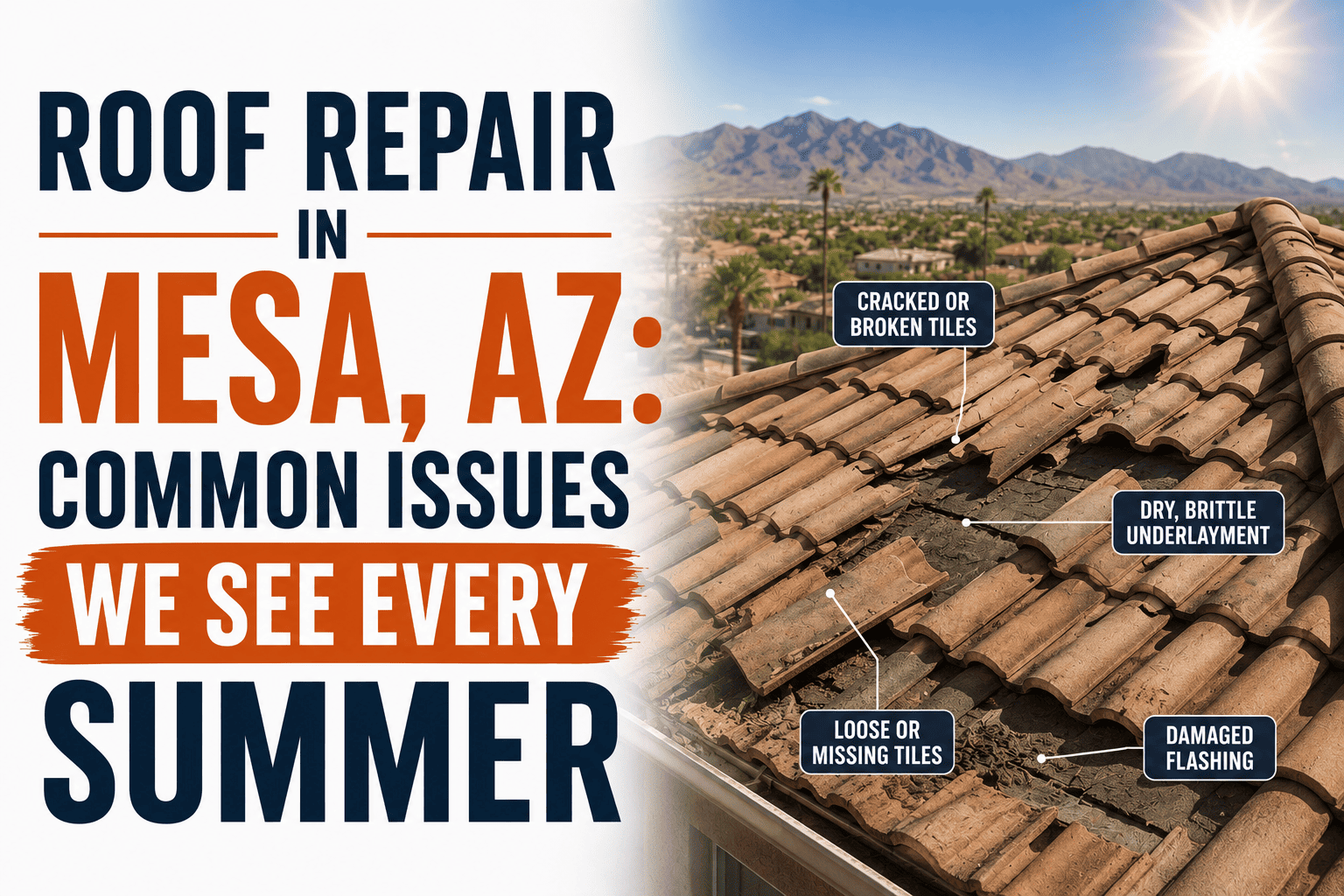
- Cracked tiles from monsoon hail or debris, often only a handful of tiles per roof
- Displaced tiles along ridgelines after strong outflow wind events
- Underlayment concerns are rare this early, since most of these roofs are still well within tile’s long expected lifespan
The most common late-summer repair calls in Mesa
Across neighborhoods and roof types, a few issues show up on repair calls more than any others by this point in the season:
- Isolated leaks traced to a single cracked tile or failed flashing point
- Minor but visible storm damage from the peak of monsoon season that homeowners want addressed before the next round of storms
- Sealant failure around roof penetrations, accelerated by a full summer of heat cycling
- Gutter and downspout damage from wind-blown debris
Why late summer is a good time to address these
Once the heaviest monsoon activity starts to taper off in Mesa, it’s a practical window to get repairs handled before the season fully ends — small issues from earlier storms are already visible, and there’s still time to address them before any late-season storms roll through. Waiting until the following spring means a small, known issue sits through months of additional heat exposure.
What to check on your own Mesa roof right now
- Look for granule buildup in gutters, especially after the most recent storms
- Check for any shingles or tile fragments in the yard
- Note any ceiling stains that appeared after a specific storm this summer
- If your home still has an old swamp cooler penetration, have it checked even if the cooler is no longer in use
FAQs
Are older Mesa homes more likely to need roof repairs?
Generally yes, particularly homes with original asphalt shingle roofs and older swamp cooler penetrations, since both accumulate wear over decades of Arizona summers.
Do newer Mesa neighborhoods still need roof repairs after monsoon season?
Yes, though the issues tend to be more isolated — typically a handful of cracked or displaced tiles from wind or hail rather than widespread material wear.
How do I know if a swamp cooler roof penetration needs attention?
If the swamp cooler is no longer used but the roof jack and seal were never professionally closed out, it’s worth having a roofer inspect the area, since old seals can degrade and become a leak point over time.
Is it better to repair storm damage now or wait until the season fully ends?
Addressing known damage promptly is generally the better call, since minor issues are cheaper to fix than the water damage that can follow if a late-season storm finds the same weak point.
Have more questions? Check out our FAQ page.