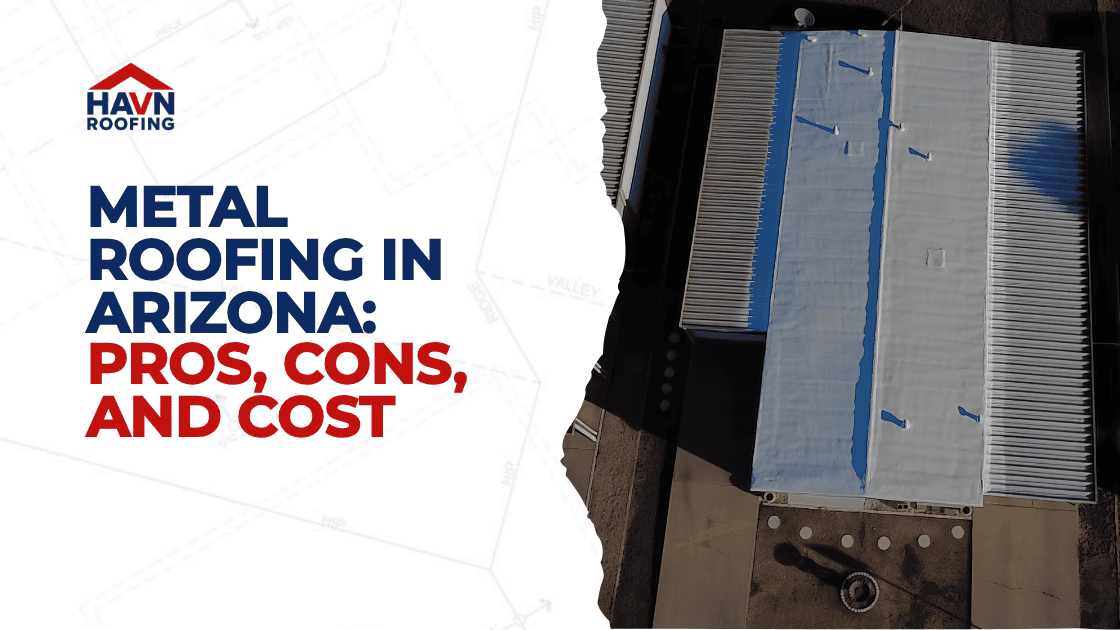
Metal Roofing in Arizona: Pros, Cons, and Cost
Is metal roofing a good fit for Arizona homes? A clear look at durability, heat performance, cost, and drawbacks to help you decide.
Metal roofing has grown more popular across the Phoenix area in recent years, and homeowners comparing options often ask how it stacks up against tile and shingles in a climate built on extreme heat and monsoon storms. Metal is a strong option for the right home, but it is not automatically the best choice for every homeowner. Here is what to know before deciding.
Why metal roofing is gaining attention in Arizona
Metal roofing has a reputation for durability and energy efficiency, and both of those qualities matter in a climate where roofs face sustained triple-digit heat, intense UV exposure, and seasonal monsoon wind and rain. Modern metal roofing has also moved well beyond the corrugated barn-style look, with standing seam panels and metal shingle profiles that fit residential neighborhoods.
Pros of metal roofing in Arizona
Long lifespan
A properly installed metal roof can last 40 to 70 years, depending on the material and coating, which puts it in the same range as tile and well ahead of asphalt shingles.
Reflects heat instead of absorbing it
Metal roofing, especially with a reflective coating, reflects a significant portion of solar radiant heat rather than absorbing it. This can meaningfully reduce attic temperatures and, in turn, cooling costs during Arizona summers.
Handles monsoon wind and rain well
Metal roofing is installed in large interlocking panels or sections, which gives it strong resistance to wind uplift when installed correctly. It also sheds water efficiently, which matters during the heavy, fast-moving rain typical of monsoon storms.
Low maintenance
Metal roofs do not crack, curl, or lose granules the way tile and shingles can. Beyond periodic inspection, they generally require less ongoing maintenance than other materials.
Fire resistance
Metal is noncombustible, which can be a meaningful benefit for homes near desert brush or in wildfire-adjacent areas.
Cons of metal roofing in Arizona
Higher upfront cost
Metal roofing typically costs more upfront than asphalt shingles, and depending on the panel type and finish, it can be comparable to or higher than tile. For budget-conscious homeowners, this is often the deciding factor.
Noise during rain and hail
Without proper underlayment and insulation, metal roofing can be noisier than tile or shingles during monsoon downpours or hailstorms. This is manageable with the right installation, but worth discussing with your contractor.
Denting from hail or debris
While metal roofing handles wind well, some panel types are more susceptible to denting from large hail or falling debris than tile. Panel gauge and material matter here — thicker, higher-quality panels resist denting better.
Expansion and contraction
Metal expands and contracts with Arizona’s dramatic day-to-night temperature swings. Over time, this can loosen fasteners if the roof was not installed with proper fastening methods designed for thermal movement. This is primarily an installation quality issue rather than a flaw in the material itself.
Not every roof style suits it
Metal roofing has a distinct look, and it is not always the right visual fit for every home style or neighborhood, particularly in communities with strict HOA guidelines that specify tile or shingle appearance.
Metal roofing cost in Arizona
Cost varies significantly based on panel type, the size and complexity of your roof, and installation details. In general terms:
- Standing seam metal panels tend to sit at the higher end of the metal roofing range, reflecting their durability and clean, modern appearance.
- Metal shingles or stone-coated steel panels are often a more moderate cost option, designed to visually resemble tile or shingles while offering metal’s durability.
- Corrugated or exposed-fastener panels are typically the most affordable metal option, though they generally have a shorter lifespan than standing seam systems and require more attention to fastener maintenance over time.
Because pricing depends heavily on your specific roof, the most accurate way to know your cost is a written estimate based on your home’s size, roof complexity, and chosen panel type.
How metal compares to tile and shingles
- Lifespan: Metal lasts 40–70 years, tile lasts 40–50+ years, and architectural shingles last 20–30 years.
- Heat reflectivity: Metal is excellent, tile is good due to thermal mass, and shingles are moderate.
- Upfront cost: Metal and tile are both higher, while shingles are lower.
- Weight: Metal and shingles are light, while tile is heavy.
- Monsoon wind performance: Both metal and tile (when intact) are strong, and shingles perform well.
- Maintenance: Metal requires the least ongoing maintenance, tile is moderate, and shingles are moderate.
Is metal roofing right for your home?
Metal roofing tends to make the most sense if you want a long-lasting, low-maintenance roof and are comfortable with a higher upfront investment, you are interested in the energy efficiency benefits of a reflective roof, or your home’s style and HOA guidelines allow for a metal or metal-shingle appearance.
It may be less of a fit if upfront cost is the primary deciding factor, or if your neighborhood’s architectural guidelines call specifically for tile or a traditional shingle look.
FAQs
Does metal roofing actually lower cooling costs in Arizona?
Reflective metal roofing can meaningfully reduce the amount of heat transferred into your attic compared to standard asphalt shingles, which can lead to lower cooling costs. The exact savings depend on your attic insulation, ventilation, and the specific coating used.
Is metal roofing loud during monsoon storms?
It can be, but proper underlayment and solid roof decking substantially reduce noise. Homes with well-installed metal roofing generally do not notice a significant difference in interior noise during rain.
Can metal roofing be installed over an existing shingle roof?
In some cases, yes, but it depends on local building codes, the condition of the existing roof, and manufacturer requirements. A roofing contractor can evaluate whether your home qualifies or whether a full tear-off is recommended.
How does metal roofing hold up against Arizona hail?
Performance depends on panel gauge and material. Thicker, higher-quality panels resist denting well, while thinner or lower-grade panels are more vulnerable. Choosing the right product for your area’s hail risk is worth discussing with your contractor.
Have more questions? Check out our FAQ page.