How to File a Homeowner’s Insurance Claim for Roof Damage in Arizona
A step-by-step guide to filing a homeowner’s insurance claim for roof damage in Arizona, including monsoon and hail damage, documentation tips, and what to expect from your adjuster.
If a monsoon storm, hailstorm, or high winds have damaged your roof, filing an insurance claim can feel overwhelming — especially if you have never gone through the process before. The good news is that most homeowner’s insurance policies in Arizona cover sudden, storm-related roof damage. Knowing the right steps to take, and in the right order, can make the difference between a smooth claim and a frustrating denial.
Here is a clear, practical walkthrough of how to file a roof damage claim in Arizona, from the moment you spot damage to the day repairs are complete.
Step 1: Document the damage right away
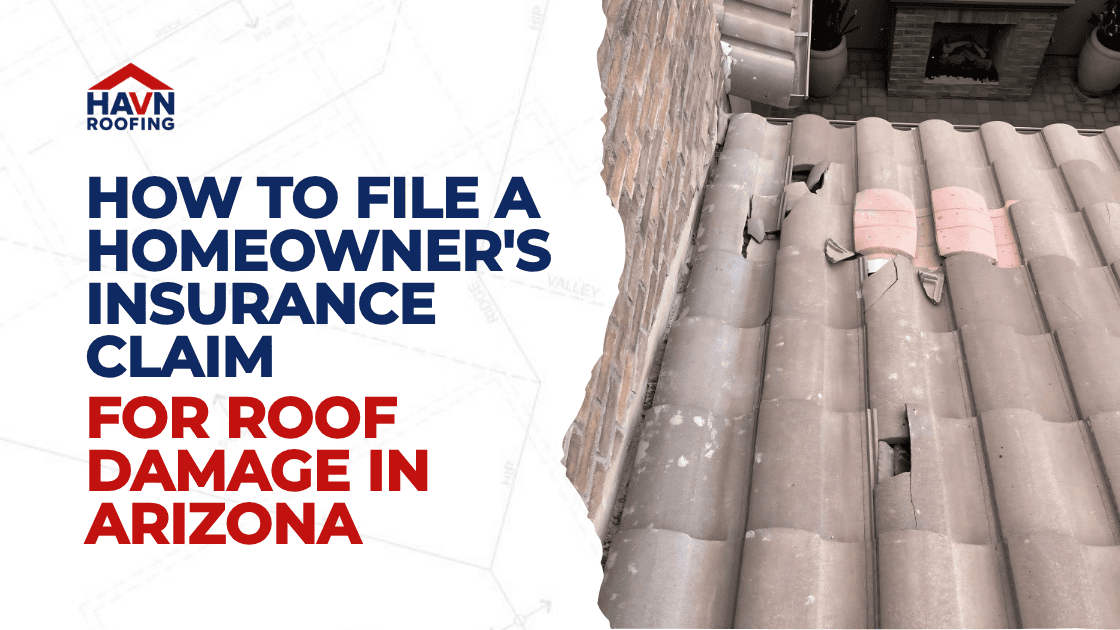
Before you call anyone, walk your property and take photos and video of anything that looks damaged — missing or cracked tiles, dented shingles, granules collecting in gutters or downspouts, dented vents or flashing, and any interior water stains or ceiling leaks. Timestamped photos taken as soon as you notice damage help establish that the damage is recent and storm-related, which matters if your insurer later asks when the damage occurred.
If it is safe to do so, note the date of the storm that likely caused the damage. Arizona’s monsoon season, which typically runs June through September, produces the majority of wind and hail-related roof claims in the Phoenix area, so tying damage to a specific storm date strengthens your claim.
Step 2: Get a professional roof inspection first
It is tempting to call your insurance company the moment you notice a problem, but getting a qualified roof inspection first puts you in a much stronger position. A licensed roofing contractor can identify damage that is not visible from the ground, distinguish storm damage from normal wear and tear, and provide a written inspection report with photos that supports your claim.
This step matters because insurance adjusters are evaluating whether damage is storm-related and covered, or the result of age and lack of maintenance, which typically is not covered. A contractor’s documentation, done before you file, gives you an independent record to compare against the adjuster’s findings.
Step 3: Review your policy
Before filing, take a few minutes to understand what your policy actually covers. Look for your wind and hail deductible, which in Arizona is often a percentage of your home’s insured value rather than a flat dollar amount, and can be higher than your standard deductible. Also check whether your policy pays actual cash value or replacement cost value for roof claims, since this significantly affects your payout. Some Arizona insurers have also begun applying roof-specific depreciation schedules or coverage limits, particularly on older roofs.
Step 4: File the claim with your insurance company
Once you have documentation and a professional inspection, contact your insurance company to open a claim. You will typically need your policy number, the date of the storm or discovery of damage, a description of the damage, and your photos and contractor’s report. Ask for a claim number and the name and direct contact information of the adjuster assigned to your case.
Most insurers in Arizona aim to send an adjuster within a few days to two weeks, depending on the volume of claims from a given storm. After widespread monsoon events, this can take longer.
Step 5: Meet the adjuster at your home
Whenever possible, be present when the adjuster inspects your roof, and have your contractor there as well. Roofing contractors who regularly work with insurance claims can point out damage the adjuster might miss and speak the same technical language the adjuster uses to categorize damage. This is one of the most common reasons claims get underpaid — damage that is real but overlooked during a rushed inspection.
Step 6: Review the adjuster’s estimate
After the inspection, the insurance company will send a written estimate outlining what they will pay for repairs or replacement. Compare this estimate carefully against your contractor’s assessment. If there are discrepancies — missing line items, incorrect measurements, or damage left out — you have the right to dispute the estimate. Provide your contractor’s documentation and ask the insurer to reconsider.
Step 7: Schedule repairs or replacement
Once your claim is approved and you understand your payout, you can move forward with repairs. Choose a licensed, insured roofing contractor experienced with insurance work, since they will understand how to invoice in a way that matches your claim documentation and avoids payment delays.
Common reasons Arizona roof claims get denied or reduced
- Damage attributed to wear and tear rather than a storm. Insurers are quick to classify aging or poorly maintained roofs as maintenance issues rather than storm damage.
- Delayed reporting. Waiting weeks or months after a storm to file can raise questions about when the damage actually occurred.
- Missing documentation. Claims without clear photos or a professional inspection report are easier for insurers to underpay.
- Skipping the independent inspection. Relying only on the insurance adjuster’s assessment, with no outside documentation to compare it to, leaves you with no leverage if the estimate seems low.
What to do if your claim is denied or underpaid
If your claim is denied or you believe the payout is too low, you have options. You can request a re-inspection, submit additional documentation from your roofing contractor, or file a formal appeal with your insurer. If the dispute is not resolved, Arizona homeowners can file a complaint with the Arizona Department of Insurance and Financial Institutions, or consult a public adjuster or attorney who specializes in property claims.
FAQs
How long do I have to file a roof damage claim in Arizona?
Most Arizona homeowner’s policies require claims to be filed within a specific window after the damage occurs, often one year, though this varies by insurer and policy. It is best to file as soon as possible after discovering damage rather than waiting.
Will my insurance rates go up if I file a roof claim?
It depends on your insurer and your claims history. A single weather-related claim, especially from a widespread storm event, is less likely to significantly impact your rate than a pattern of multiple claims. Your agent can tell you how your specific policy handles this.
Does homeowner’s insurance cover a full roof replacement or just repairs?
This depends on the extent of the damage and your policy’s coverage terms. If the damage is isolated, insurers often approve a repair. If the roof is damaged extensively enough that a partial repair is not feasible or would leave mismatched materials, a full replacement may be approved.
Should I get multiple contractor estimates before filing a claim?
A single inspection from a licensed, experienced roofing contractor is usually enough to support your claim. What matters most is that the inspection is thorough and well documented, not the number of estimates you collect.
Have more questions? Check out our FAQ page.