Roof Coatings vs. Full Replacement: When Each Makes Sense
Not sure whether your roof needs a coating or a full replacement? Here’s how to tell the difference and which option actually makes sense for your situation.
If your roof is showing its age but hasn’t completely failed, you’ve probably run into two very different recommendations: coat it, or replace it. Both are legitimate options — but they solve different problems, and choosing the wrong one can either waste money or leave you exposed to a bigger repair later. Here’s how to think through which makes sense for your home.
What a roof coating actually does
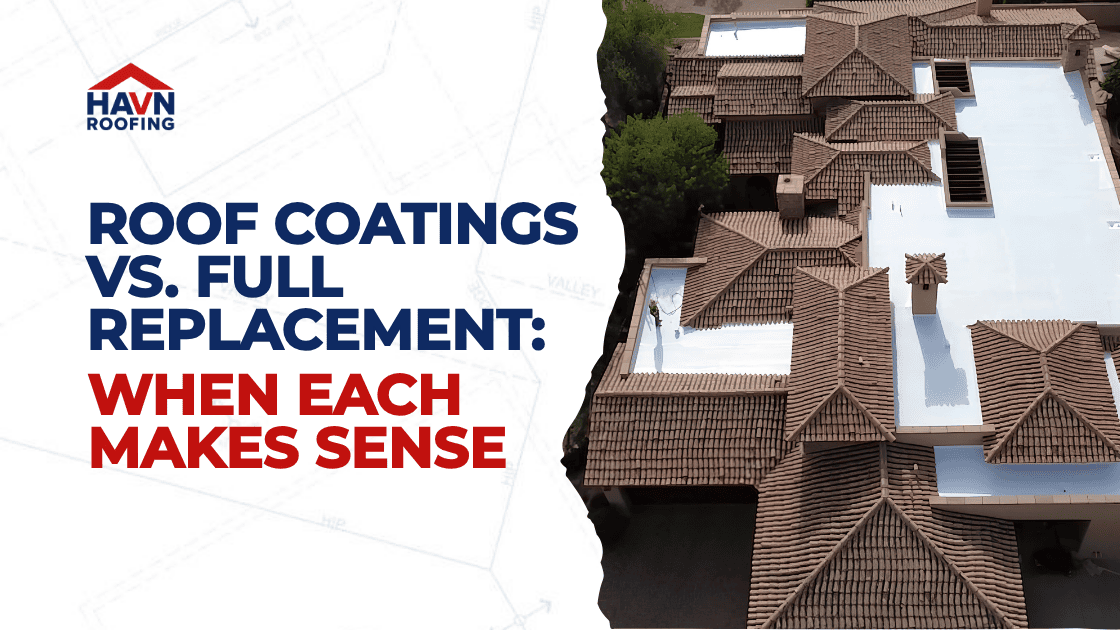
A roof coating is a protective layer applied over your existing roofing material — most commonly on flat or low-slope roofs, though reflective coatings are also used on some tile and metal systems. The coating adds a barrier against UV exposure and moisture, and in many cases improves the roof’s reflectivity, which can reduce heat transfer into the home.
Coatings are not a new roof. They’re a way to extend the useful life of a roof that is still structurally sound, by protecting the existing surface from further degradation.
What a coating can fix
- Minor surface-level UV damage and oxidation
- Small cracks or pinholes in a flat or low-slope roof membrane
- Reduced reflectivity that’s driving up cooling costs
- General wear on a roof that still has usable life left
What a coating cannot fix
- Structural damage to the roof deck
- Widespread or advanced leaks
- Failed underlayment beneath tile or shingle
- A roof that is past its realistic service life for its material type
What full replacement solves
A full replacement removes the existing roofing system down to the deck (or in some cases the underlayment) and installs new material from the ground up. It’s a larger investment, but it resets the clock — you get a full expected lifespan out of the new system rather than a temporary extension.
Replacement is generally the right call when the roof’s core waterproofing layer — the underlayment or membrane — is failing, not just the visible surface material.
How to tell which one you actually need
This is where a lot of homeowners get stuck, because surface-level symptoms can look similar whether the underlying problem is minor or serious. A few questions worth asking during an inspection:
How old is the roof, relative to its expected lifespan?
A 10-year-old shingle roof with surface wear is a very different situation than a 22-year-old shingle roof near the end of its expected life. Coatings make the most sense earlier in a roof’s lifespan; replacement becomes the more sensible option as a roof approaches or passes its expected service life.
Is the damage limited to the surface, or does it go deeper?
Surface staining, minor oxidation, or small isolated cracks are often coating-appropriate. Soft spots in the decking, widespread leaking, or multiple active leak points typically point toward replacement, since a coating can’t correct problems happening beneath the surface.
What does a moisture inspection show?
A proper inspection often includes checking for trapped moisture within the roofing system, not just visible surface condition. If moisture has already gotten into the underlayment or deck, coating over the problem just seals it in rather than solving it.
What’s your timeline for staying in the home?
If you’re planning to stay long-term, a full replacement on an aging roof is usually the more cost-effective choice over time. If you need a shorter-term solution — for budget reasons, or because you’re planning to sell — a coating on a roof that’s still structurally sound can be a reasonable bridge.
A side-by-side look
Roof coating
- Best for: roofs with surface wear that are still structurally sound
- Typical cost: lower
- Lifespan added: several years, product-dependent
- Fixes structural issues: no
- Best timing: earlier in the roof’s life
Full replacement
- Best for: roofs with failing underlayment or extensive damage
- Typical cost: higher
- Lifespan added: full lifespan of new material
- Fixes structural issues: yes
- Best timing: roof nearing or past expected lifespan
Why an honest inspection matters more than the product
The biggest risk in this decision isn’t picking the wrong option in a vacuum — it’s getting steered toward whichever service is more profitable rather than what your roof actually needs. A coating recommended for a roof with failing underlayment just delays an inevitable, more expensive replacement. A full replacement recommended for a roof that only needed a coating is an unnecessary expense.
A thorough inspection — checking not just the surface but the underlayment, decking, and flashing — is what actually determines the right call. Any contractor recommending one option or the other should be able to explain specifically why, based on what they found.
Final takeaway
Coatings and full replacements solve different problems. A coating protects and extends a roof that’s still fundamentally sound. A replacement addresses a roof whose core waterproofing has already failed or is close to it. The right choice comes down to an honest look at your roof’s actual condition — not just its age or appearance from the ground.
FAQs
How long does a roof coating typically last?
This depends on the product and application, but many roof coatings extend a roof’s usable life by several years before reapplication or replacement becomes necessary. Your contractor can give you a more specific estimate based on the coating product used.
Is a roof coating cheaper than replacement?
Generally, yes. Coatings are a lower-cost option upfront, which is part of why they’re appealing for roofs that don’t yet need full replacement. However, a coating applied to a roof that actually needs replacement can end up costing more overall once replacement becomes unavoidable anyway.
Can any roof be coated?
Coatings are most common on flat and low-slope roofs, though certain reflective coatings are also used on some tile and metal systems. Not every roofing material or condition is a good candidate — an inspection can confirm whether coating is a realistic option for your specific roof.
What happens if I coat a roof that actually needs replacing?
The coating may temporarily mask surface issues, but it won’t address underlying underlayment failure or structural damage. This can delay a necessary replacement while the underlying problem continues, often making the eventual repair more extensive and costly.
How do I know if my roof needs an inspection to decide?
If your roof is showing visible wear, is approaching the upper end of its expected lifespan, or you’ve noticed any signs of leaking, it’s worth getting a professional inspection before deciding between a coating and full replacement.
Have more questions? Check out our FAQ page.