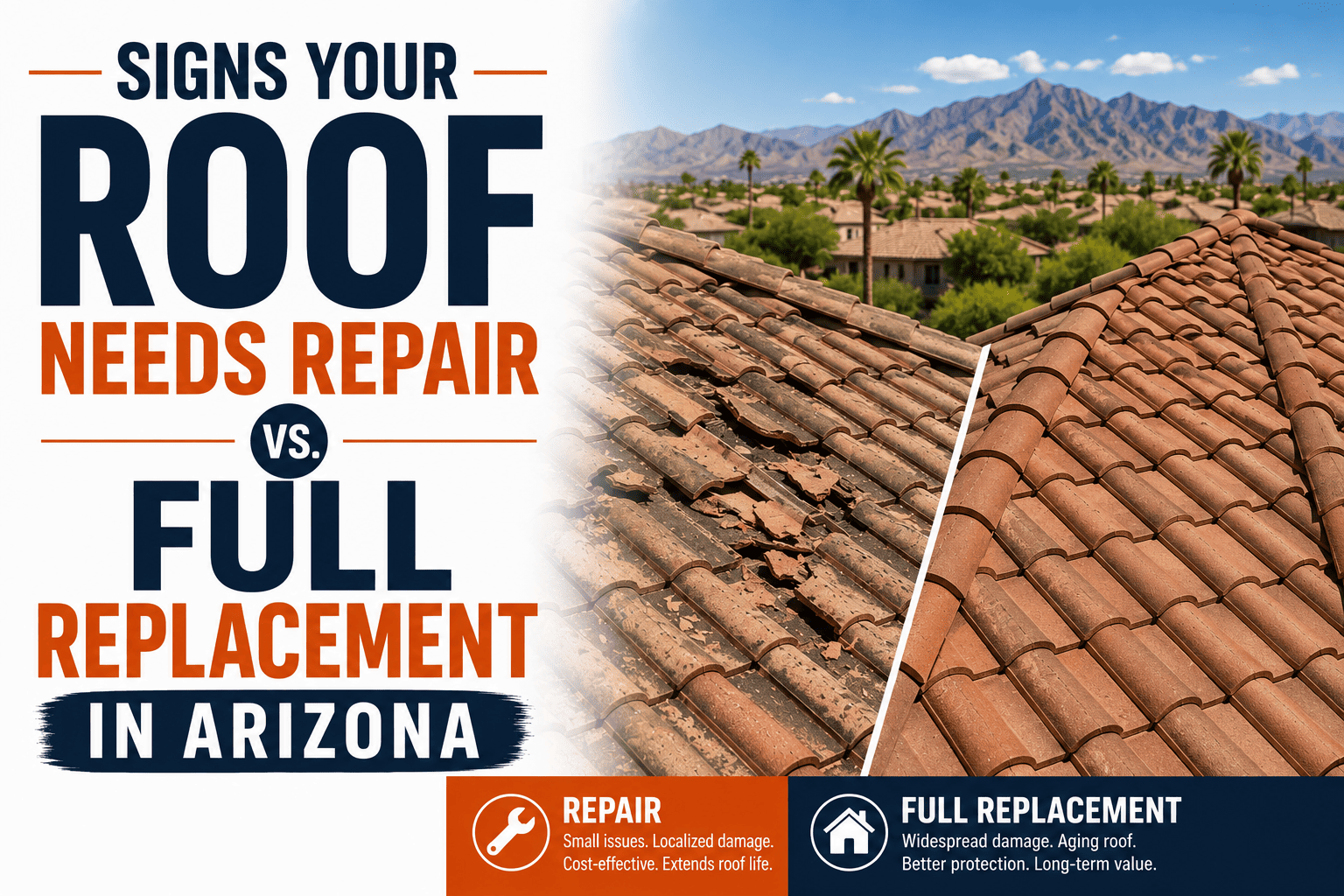
Signs Your Roof Needs Repair vs. Full Replacement in Arizona
Not sure if your Arizona roof needs a repair or a full replacement? Here’s how to tell the difference, backed by age, damage extent, and cost guidelines.
This is one of the most common questions Arizona homeowners face: does the roof need a repair, or is it time for a full replacement? The honest answer depends on a handful of factors — age, extent of damage, and how the damage is distributed across the roof — and getting it right can save thousands of dollars either way. Here’s how to think through it.
Start with the age of your roof
Age is the single biggest factor in this decision, because it tells you how much life is left in the underlying materials even where damage isn’t visible yet.
- Asphalt shingles (0–15 years): Repair is usually the right call for isolated issues.
- Asphalt shingles (15–25 years): Repairs are still possible, but replacement becomes more cost-effective if multiple areas need attention.
- Tile roofs (0–35 years): The tile itself typically outlasts this range; most issues are repairable underlayment or flashing problems rather than the tile.
- Tile roofs (35–50+ years): Even though tiles may look fine, the underlayment beneath them is likely due for replacement, which usually means removing and resetting the tile.
If your roof is near the end of its expected lifespan, a repair may only be a short-term fix before bigger issues surface.
How much of the roof is affected
A single damaged area — one cracked tile, one section of curling shingles, one leak around a vent — is almost always a repair. The calculation changes when damage shows up in multiple, unrelated areas of the roof at once. Scattered damage across different sections often signals that the whole roofing system is reaching the end of its useful life, not that several unrelated problems happened to occur together.
Signs that typically point to repair
- A single leak with a clearly identifiable source, like a cracked tile or failed flashing
- Isolated shingle damage in one section, with the rest of the roof in good condition
- Minor granule loss without widespread curling or blistering
- Damage clearly tied to a specific event, like a fallen branch during a monsoon storm
- A roof that is otherwise well within its expected lifespan
Signs that typically point to full replacement
- Leaks in multiple, unrelated locations
- Widespread curling, cracking, or blistering across most of the roof
- A roof at or past the upper end of its material’s expected lifespan
- Repeated repairs to the same general area within a short period
- Visible sagging, which can indicate structural issues beneath the roofing material
- Extensive storm damage affecting a large portion of the roof at once
The cost math worth knowing
As a rough guideline, if repair costs are approaching 30 to 50 percent of a full replacement, it’s worth getting a full replacement quote for comparison. A roof that needs several disconnected repairs within the same year or two often ends up costing more in total than a single planned replacement would have — without the peace of mind that comes with a fresh roof and a new warranty.
Why a professional inspection matters here
Some of the clearest signals — underlayment condition beneath tile, the extent of decking damage, or how much life is genuinely left in aging shingles — aren’t visible from the ground or even from a quick look on the roof. A written inspection report that documents findings section by section gives you the actual basis for a repair-versus-replacement decision, rather than a guess.
FAQs
How do I know if my roof damage is from one storm or ongoing wear?
Damage concentrated in one area, especially near where a tree limb or debris impact occurred, usually points to a single event. Damage spread across multiple sections, especially combined with an older roof, more often points to general wear.
Is it ever worth repairing an old roof instead of replacing it?
Sometimes, if the damage is truly isolated and the roof still has meaningful life left. A professional assessment of the underlying materials — not just the visible surface — is the best way to confirm this.
How much does a roof repair typically cost compared to replacement in Arizona?
Costs vary widely based on material and scope, but as a general rule, if repair estimates start approaching a third to half of a full replacement cost, it’s worth comparing both options directly.
Does insurance typically cover roof replacement in Arizona?
Coverage depends on your specific policy and the cause of damage — storm-related damage is more commonly covered than damage from gradual wear and age. Your inspection report can help support an insurance claim either way.
Have more questions? Check out our FAQ page.