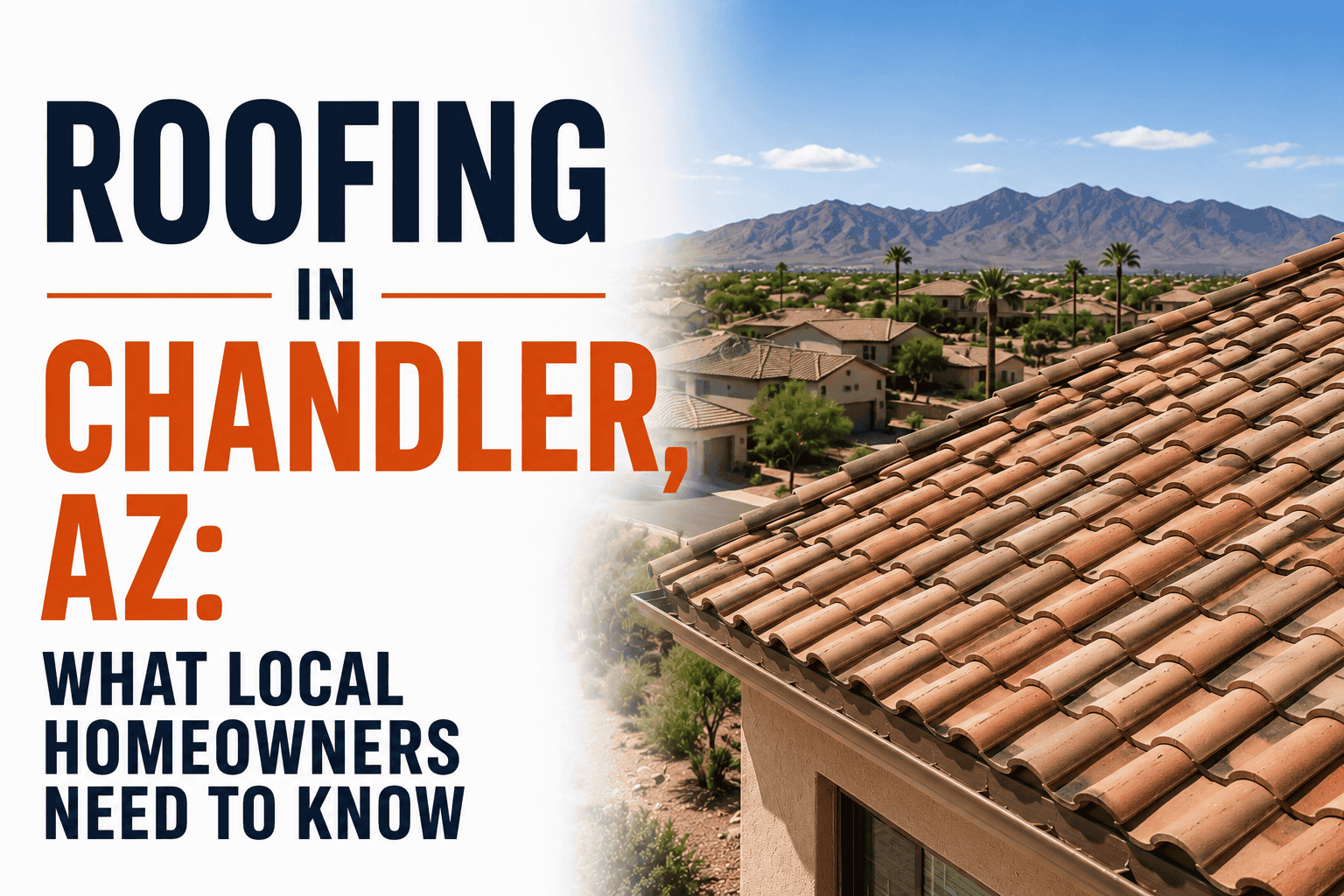
Roofing in Chandler, AZ: What Local Homeowners Need to Know
A local guide to roofing in Chandler, Arizona — common materials, HOA rules, monsoon risks, and what to know before repairing or replacing your roof.
Chandler has grown fast, and the roofs across the city reflect that. Newer master-planned communities near Ocotillo and Sun Groves sit alongside older established neighborhoods near downtown Chandler and Fulton Ranch, each with their own mix of roofing materials, ages, and HOA expectations. If you own a home here, there are a few things specific to Chandler worth knowing before you repair or replace your roof.
Chandler’s climate is tougher on roofs than it looks
Chandler sits in the same brutal heat zone as the rest of the East Valley, with summer roof surface heat regularly climbing past 160°F. What makes Chandler specifically demanding is the combination of that sustained heat with direct monsoon exposure — the city sits in a corridor that regularly sees strong outflow winds and heavy rain during monsoon season from June through September. Roofs here need to hold up to both extremes: months of relentless UV and heat, then sudden, intense storm stress.
What roofing materials are common in Chandler
Tile is the dominant roofing material across most Chandler subdivisions, particularly in newer developments where HOA guidelines often require it. Concrete tile roofs are common in communities like Ocotillo, Sun Groves, and Springfield Lakes. Older neighborhoods closer to downtown Chandler and along Arizona Avenue are more likely to have asphalt shingle roofs, especially on homes built before the 1990s tile boom that shaped much of the city’s newer construction.
HOA considerations for Chandler homeowners
A large share of Chandler homes fall under an HOA, and roofing is one of the areas HOAs tend to regulate closely. Before starting any roofing project, it’s worth checking your community’s rules on:
- Approved materials and colors. Many Chandler HOAs specify tile profiles or shingle colors that match the neighborhood’s existing look.
- Contractor approval or notification requirements. Some communities require advance notice or approval before roofing work begins.
- Timeline restrictions, particularly around noise ordinances or seasonal restrictions tied to snowbird residents.
A reputable local roofing contractor will typically be familiar with the HOA requirements for major Chandler communities and can help you navigate the approval process.
Monsoon risk by area
Chandler’s flatter terrain and open subdivisions mean wind is often the primary monsoon concern rather than flooding, though low-lying areas near washes can see standing water during heavy storms. Homes in newer developments with tile roofs generally fare well in wind if the tile was installed correctly, while older shingle roofs — especially those nearing the end of their lifespan — are more vulnerable to wind lift during a strong outflow event.
Signs your Chandler roof may need attention
A few things are worth watching for, regardless of what part of Chandler you live in:
- Granule buildup in gutters after monsoon storms
- Cracked or slipped tiles visible from the ground or a neighbor’s upstairs window
- Ceiling stains, especially after a heavy rain event
- Curling or blistering shingles on older roofs, a common sign of heat-related wear
- Visible sagging along the roofline, which can indicate structural issues beneath the surface
Choosing a roofing contractor in Chandler
Because so much of Chandler’s housing stock is HOA-governed and relatively new, it’s worth choosing a contractor with specific experience in the city rather than a general Valley-wide crew. Local experience helps with HOA paperwork, matching tile profiles for partial repairs, and understanding which products perform best given Chandler’s exact mix of heat and monsoon exposure.
FAQs
Does Chandler require permits for roof replacement?
Roofing permit requirements are set by the City of Chandler’s building department and can vary by project scope. A licensed local contractor can confirm what’s needed for your specific job.
How long do tile roofs typically last in Chandler?
A properly installed tile roof in the Chandler area can last 40 to 50 years or more, thanks to tile’s strong resistance to UV and heat.
Is my Chandler home more likely to have tile or shingles?
It largely depends on when your neighborhood was built and whether it falls under an HOA. Newer communities tend to require tile, while older neighborhoods are more likely to have asphalt shingles.
What should I do if my roof is damaged after a Chandler monsoon storm?
Document any visible damage with photos, check your attic for water intrusion, and schedule a professional inspection promptly — especially if you notice missing tiles, shingles, or ceiling stains.
Have more questions? Check out our FAQ page.