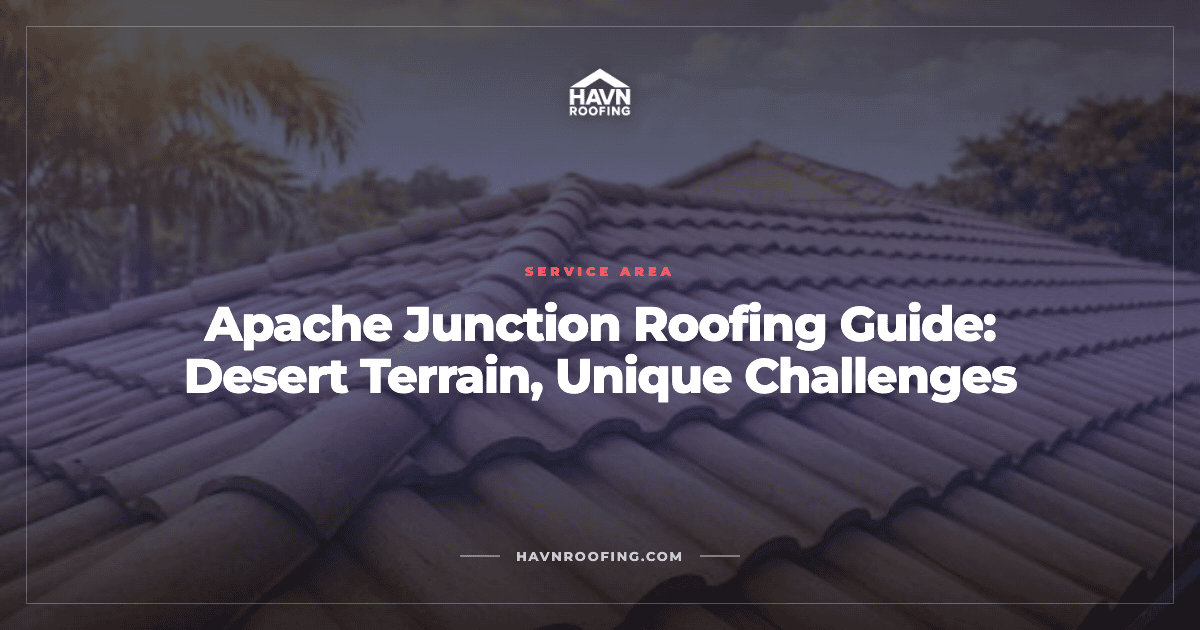
Apache Junction Roofing Guide: Desert Terrain, Unique Challenges
Apache Junction’s desert terrain and Superstition Mountains backdrop create roofing challenges homeowners elsewhere in the East Valley don’t face. Here’s what to know.
Apache Junction sits at the edge of the East Valley, right up against the Superstition Mountains, and that setting brings roofing conditions that are a step beyond what homeowners in Mesa, Chandler, or Gilbert typically deal with. More exposed terrain, more wind, more dust, and homes spread across a wider range of ages and construction styles all factor into what an Apache Junction roof needs to hold up.
How Apache Junction’s setting affects roofing
Apache Junction’s terrain is more open and more exposed than the denser East Valley cities closer to central Phoenix. That has real consequences for roofs.
Wind exposure near the Superstitions
Homes near the base of the Superstition Mountains and in more exposed desert lots can see stronger, more unpredictable wind gusts than homes in denser, more sheltered subdivisions. Wind is one of the leading causes of shingle lift and tile displacement during storms.
Dust and debris
The surrounding desert terrain means more airborne dust and debris working into roof vents, valleys, and flashing over time. This can accelerate wear on shingle granules and clog ventilation if roofs aren’t inspected periodically.
Wide range of home ages
Apache Junction has a mix of older homes from decades past and newer construction, more so than some of the East Valley’s more recently developed suburbs. That means roofing needs vary widely from property to property — a 1980s home and a home built in the last decade can need very different approaches.
Material considerations for Apache Junction homes
Tile roofs in exposed desert settings
Tile performs well against Arizona heat and UV exposure, and its weight makes it more wind-resistant than lighter materials once properly installed. In more exposed areas near the mountains, secure installation and periodic checks for cracked or slipped tiles matter even more than in sheltered subdivisions.
Shingle roofs and wind rating
If your home has (or will have) a shingle roof, wind rating matters more in Apache Junction’s more exposed lots than it might in a sheltered Chandler or Gilbert neighborhood. Higher wind-rated shingle products, along with proper nailing patterns and starter strip installation, reduce the risk of wind lift during monsoon storms.
Flashing and vent detailing
Because dust and debris accumulate more readily here, flashing and vent details deserve extra attention during installation and at every inspection. Poorly sealed penetrations are a common source of leaks once dust and grit work their way into small gaps.
Older homes: what to check
Many Apache Junction properties are older than the East Valley average, which means more homes are approaching or past the typical lifespan of their original roofing material.
- If your home has original shingles from a build date more than 15-20 years ago, an inspection is worth scheduling even without visible problems.
- Older flashing and pipe boot seals are common failure points and are inexpensive to replace proactively compared to repairing water damage later.
- Attic ventilation on older homes was sometimes undersized by today’s standards — upgrading it during a re-roof can meaningfully improve comfort and roof lifespan.
Monsoon season in Apache Junction
Monsoon storms hit the more exposed parts of Apache Junction with a combination of high wind and heavy rain that can be more intense than in sheltered parts of the Valley.
- Have loose or damaged shingles, tiles, or flashing addressed before monsoon season starts each year.
- Clear debris from gutters, valleys, and downspouts, since dust and desert debris accumulate faster here.
- After a major storm, a visual check (or professional inspection) for lifted shingles, cracked tiles, or dented vents is worth doing even if there’s no visible leak yet.
Smart questions to ask about an Apache Junction roof
- Is my roof’s wind rating appropriate for a more exposed desert lot near the Superstitions?
- When was my home built, and does the roofing material match that era’s typical lifespan?
- Are my flashing and vent seals in good condition, given how much dust and debris this area sees?
- Has my roof been checked since the last major monsoon or wind event?
- If I’m buying a home in Apache Junction, can the roof’s age and condition be independently verified?
FAQs
Is Apache Junction’s climate really different from the rest of the East Valley?
The underlying heat and monsoon challenges are shared across the Valley, but Apache Junction’s more open, exposed terrain near the Superstition Mountains means stronger wind exposure and more dust and debris than denser, more sheltered East Valley cities.
Does wind rating matter more for homes near the Superstitions?
Yes. More exposed lots can experience stronger, less predictable gusts than sheltered subdivisions, so higher wind-rated shingle products and secure tile installation matter more here than in more protected areas.
My Apache Junction home is older — how do I know if the roof needs replacing?
Age alone isn’t the full picture, but a roof approaching or past 15-20 years old with standard shingles is worth having inspected. A professional can assess actual condition rather than relying on age as a guess.
What should I check on my roof after a big monsoon storm in Apache Junction?
Look for lifted or missing shingles, cracked or displaced tiles, dented vents, and debris buildup in valleys and gutters. If anything looks off, or if you’re not sure, a professional inspection is the safer route before the next storm.
Have more questions? Check out our FAQ page.