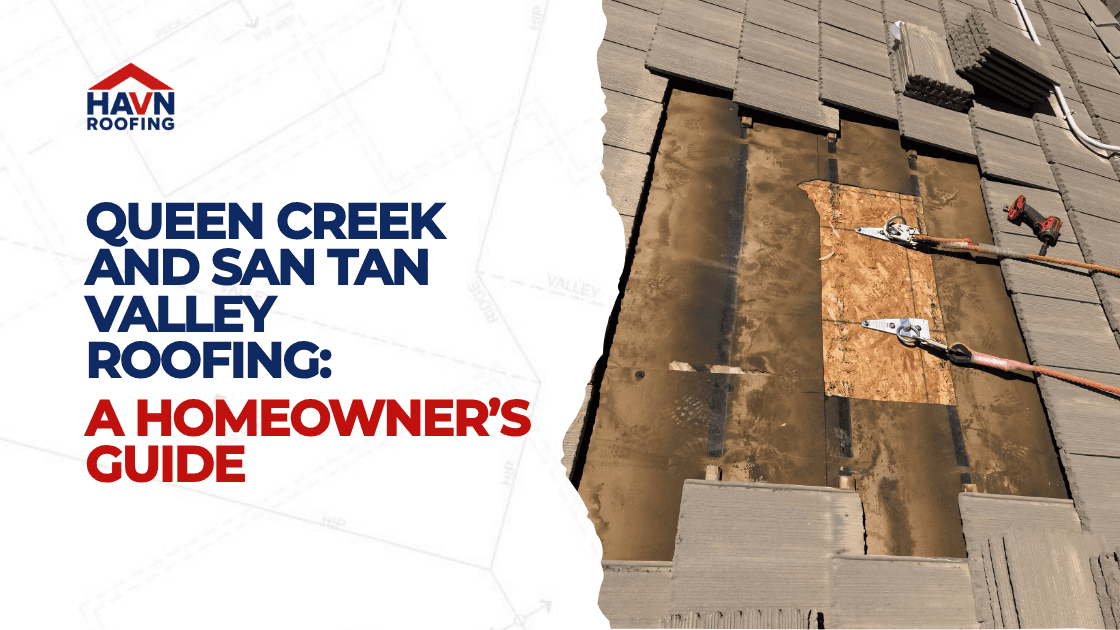
Queen Creek and San Tan Valley Roofing: A Homeowner’s Guide
A homeowner’s guide to roofing in Queen Creek and San Tan Valley — new construction considerations, HOA rules, monsoon prep, and how to choose a local roofer.
Queen Creek and San Tan Valley are two of the fastest-growing communities in the East Valley, and that growth brings a roofing landscape that looks a little different from older, more established parts of the Phoenix metro. Newer subdivisions, active HOAs, and a mix of production-built and custom homes all shape what homeowners here need to know about their roofs.
Why roofing looks different in a fast-growing area
Much of Queen Creek and San Tan Valley was built out over the last two decades, with a large share of homes going up in just the last several years. That means roofs here tend to skew newer than in cities like Phoenix or Tempe — but it also means homeowners are often dealing with builder-grade materials for the first time, HOA architectural guidelines they have never had to navigate before, and questions about what is actually covered under a builder warranty versus what falls to the homeowner.
New construction also tends to cluster, which means whole neighborhoods often reach the same roofing milestones — inspections, minor repairs, warranty expirations — around the same time.
Common roofing situations in Queen Creek and San Tan Valley
New construction and builder warranties
Most builder warranties cover roofing defects for a limited window, often one to two years, with structural coverage lasting longer. It is worth understanding exactly what your builder’s warranty covers and for how long, since general wear, storm damage, and issues outside manufacturing defects are typically not included.
HOA architectural guidelines
Many communities in this area have HOA rules governing roof color, tile profile, and material type — particularly for re-roofs or repairs that are visible from the street. Checking your HOA’s architectural guidelines before starting any roofing project can save time and avoid a rework.
A mix of tile and shingle roofs
Newer developments in Queen Creek and San Tan Valley include both tile and shingle roofs, often within the same subdivision. Tile tends to be more common on production homes here, but shingle roofs are common as well, especially on older sections of San Tan Valley.
Desert land and unique lot conditions
Some properties in San Tan Valley sit on larger desert lots with more direct sun exposure and less surrounding shade than tighter subdivisions closer to central Phoenix. That added sun exposure is worth factoring in when thinking about material choice and expected lifespan.
Preparing for monsoon season in the East Valley
Monsoon season, which runs roughly June through September, brings high winds, heavy rain, and dust storms to Queen Creek and San Tan Valley just like the rest of the Valley. A few things are worth checking before the season starts:
- Loose or lifted tiles and shingles, especially on newer roofs where a few units may not have settled correctly
- Gutters and drainage paths, since some newer lots have less established landscaping to help direct water away from the foundation
- Flashing around vents, skylights, and chimneys, which is a common source of leaks after wind-driven rain
- Any areas where roofing work was recently completed, to confirm everything was sealed properly
Choosing a roofer in Queen Creek or San Tan Valley
Because this area has grown so quickly, it can be harder to find a contractor with a long local track record compared to more established parts of the Valley. A few things worth asking any roofer you are considering:
- Do they have experience working within your specific HOA’s guidelines?
- Are they familiar with the builder who constructed homes in your neighborhood, and any known issues tied to that builder?
- Can they provide local references from your specific community or nearby subdivisions?
- Do they offer a written estimate that separates material, labor, and any HOA-required specifications?
FAQs
Is my roof still under builder warranty?
It depends on how old your home is and what the original builder’s warranty terms specify. Reviewing your closing documents or contacting your builder directly is the fastest way to confirm current coverage.
Do I need HOA approval before repairing my roof?
Many Queen Creek and San Tan Valley communities require approval for any visible exterior work, including roof repairs or replacement, especially if the color or material would change. Check your HOA’s architectural guidelines before starting work.
Are tile roofs more common than shingle roofs in this area?
Both are common. Tile tends to appear more often on production-built subdivisions, while shingle roofs are found throughout both Queen Creek and San Tan Valley, particularly in older sections.
What should I check on my roof before monsoon season?
Loose tiles or shingles, clogged gutters, and flashing around roof penetrations are the most common trouble spots. A pre-monsoon inspection can catch small issues before they become leaks.
Have more questions? Check out our FAQ page.